
Teen Dating Violence Awareness & Support
Domestic Violence is a serious public health problem that affects millions of young people every year.
Teen dating violence is a form of domestic violence that affects young people, involving physical, emotional, verbal, sexual, or digital abuse to gain power and control. Dating violence can happen in person, at school, or online. It affects teens of all genders, identities, and backgrounds.
Teen girls, Black, Indigenous, teens of color, and LGBTQ+ teens face higher risks of experiencing dating violence.
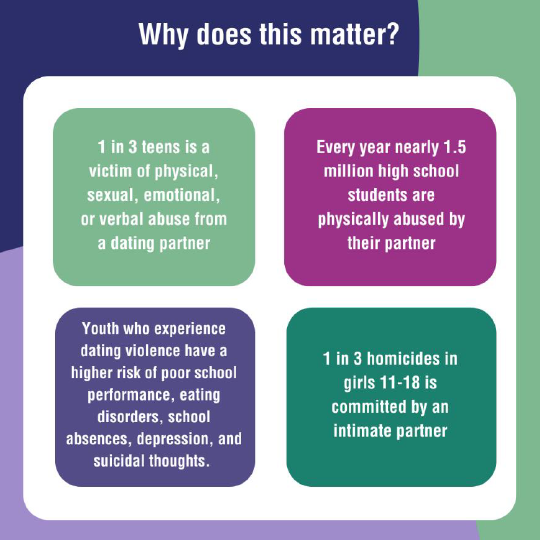
For teens, abusive behavior frequently happens at school or in online spaces.
No form of abuse is ok.
Teens or young adults can experience dating violence such as:
- Emotional or verbal (put-downs, threats, jealousy)
- Physical (hitting, pushing, restraining)
- Sexual (pressuring or forcing contact without consent)
- Digital (checking phones, sharing private photos without permission)
- Controlling behaivors (isolation from friends or family)
- Damaging or destroying items needed for school or work; papers or projects, books, electronic devices, homework, instruments, athletic uniforms, dance shoes, etc.
Healthy Relationships include: respect, trust, boundaries, good communication, equality, and the freedom to be yourself.
It is important to remember, it is never someone’s fault if they find themselves in an abusive relationship.
To determine if you ar a friend are in an abusive relationship, ask yourself:
- Do they treat you well?
- Do they respect you, your choices, and boundaries?
- Do they respect what you feel comfortable doing sexually?
- Do you feel safe being yourself?
- Is there trust between you?
- Can you wear what you want without them getting upset?
- Do they give you space to hang out with your friends?
- Are you able to make your own decisions?
- Do you spend time apart doing separate things each of you enjoy
These are “green flag behaviors,” and answering yes to these questions indicates that you or your friend are in a safe and healthy relationship.
A healthy dating relationship or friendship should include the following qualities and behaviors:
Talk With a Safe Adult
If unsafe and dangerous behavior is happening in your relationship or you see it happening to a friend, talk to a safe adult who will listen to you and who you know will believe you.
Helpful ways to start:
- I need to tell you something, but I don’t need advice. I just need support.
- I’m not sure where else to turn and I need someone who will listen and help.
- I’m scared or worried.
- Someone is threatening me/my friend. I don’t know if the threats are “real” but I’m scared.
- I feel alone and isolated.
- I need help and I don’t know what to do.
- I’m worried about getting someone in trouble, but I have to tell someone what is happening.
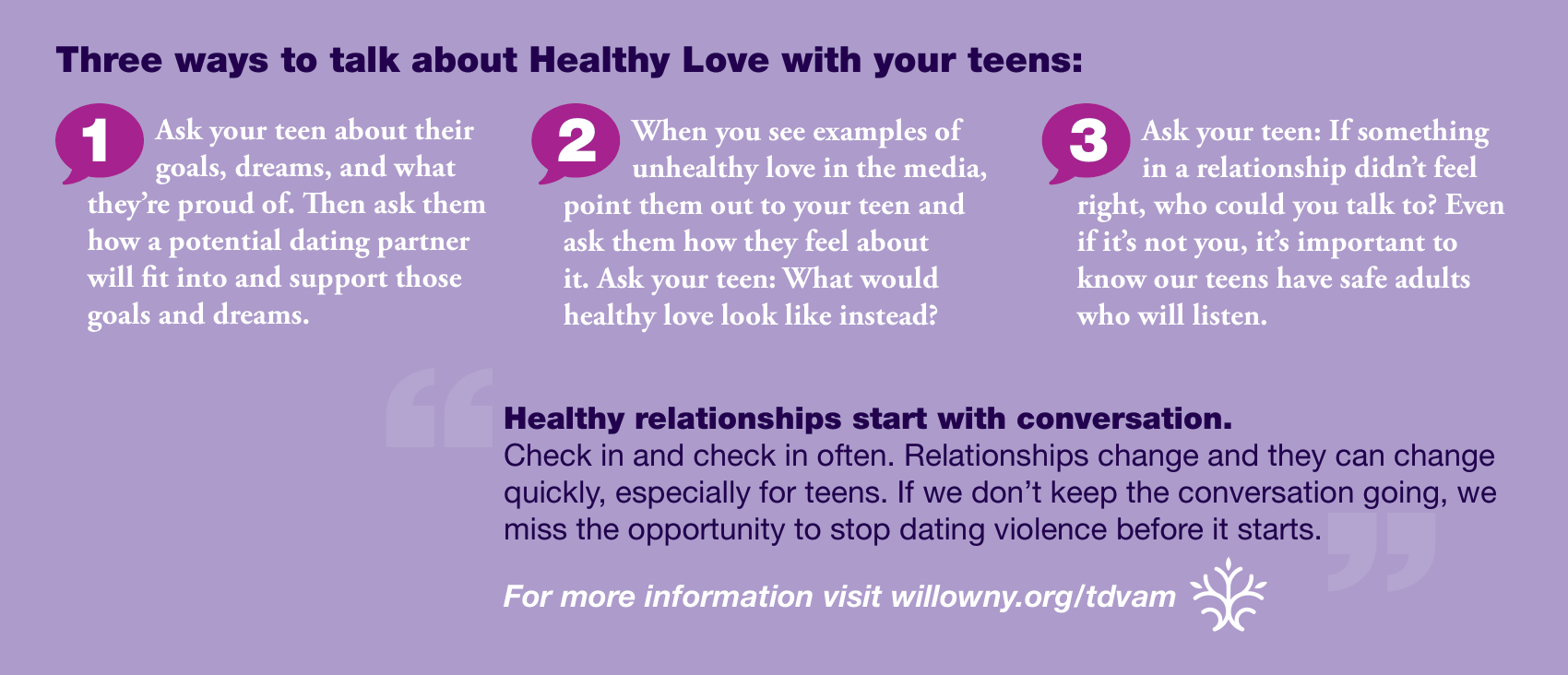
Start with Curiosity, Not Judgement
Ask open-ended questions like:
- What does a healthy relationship look like to you?
- What are the qualities of this relationship that make it feel so good/healthy?
- What do you like to do with your friends or partner? What do you like to talk about?
Listen more than lecture. Notice early signs and gently explore what’s going on.
Avoid shaming or minimizing their experience.
Your role is to support them in figuring out what feels right and safe for them.
If you are worried about the relationship, ask and say:
- I love you and I’m worried about you.
- I’m here to listen to you and support you. I just want you to be safe.
- What help do you need right now?
There are many resources for support and more information.
Rochester and Monroe County:
Willow’s 24/7, Confidential Hotline
- Call or Text: 585-222-7233
- Secure webchat: willowcenterny.org
The Center for Youth (Rochester, NY)
- Hotline: 585-271-7670
National Teen Dating Abuse Helpline, 24/7
- Call: 801-66-331-9474
- Text: ‘LOVEIS’ to 22522
Learn more about Dating Violence:
- Dating Violence red flags and Healthy Relationships at Loveisrespect.org
- Make a safety plan